Wall of Fame
The IHN Award was first given at the International Haemovigilance Seminar in Dubrovnik in 2010, thanks to an endowment from Prof.Dr. Erhard Seifried following the 2008 Frankfurt Seminar.
The award is presented to a person or organization who/that has made an important contribution to the advancement of haemovigilance from a scientific point of view.
The IHN Award, consisting of a certificate and a trophy is presented at the International Haemovigilance Seminar, where the awardee gives a plenary lecture.
Nominations for the IHN Award may be submitted to the Secretary of the IHN according to instructions announced before each Seminar. Nominations should include a letter explaining how the candidate has made an important contribution to the advancement of haemovigilance, accompanied by a copy of relevant publication(s) documenting this, a current CV and a full list of publications by the candidate.

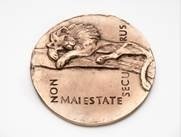
Since 2011 a special medal (showing a lion as the symbol for vigilance) is granted to a person who has made an extraordinary contribution to the work of IHN.
Click here for more information about the regulations
| Year | Award | Medal |
| 2026 | Barbee Whitaker | IHN Award (Individual) |
| 2026 | Øystein Flesland | IHN Medal |
| 2026 | SHOT | IHN Award (Team) |
| 2022 | Kevin Land | Erica Wood |
| 2018 | Johanna Wiersum-Osselton | Paula Bolton-Maggs |
| 2016 | Luc Noel | Peter Tomasulo |
| 2014 | — | Bernard David, Philippe Renaudier |
| 2013 | Constantina Politis | Paul Strengers |
| 2012 | — | Rene de Vries |
| 2011 | Lorna Williamson | Jan Jorgensen |
| 2010 | Jean Claude Faber | — |
Dr Martin Schipperus from Netherlands received the IHN Medal in 2024. As the first director of the TRIP National Haemovigilance and (later) Biovigilance Office in The Netherlands, he was instrumental in developing the Dutch vision of haemovigilance, which indeed has become welt-known around the world. In his career Dr Schipperus has always advocated the scientific use of haemovigilance data to support clinical transfusion practice. This is reflected in the large number of scientific publications in this field. He is passionate about the need for standard definitions as well as the benefits of creating a network of dedicated haemovigilance staff within hospitals to monitor and support data collection in the clinical setting and of an annual conference dedicated to transfusion and haemovigilance. In 2023, in collaboration with the Dutch Association of Blood Transfusion and the University of Applied Sciences in Rotterdam, he set up a training course for the teaching of clinical research skills to hemovigilance workers from all over the country. Dr Schipperus’ international activities included the IHN treasurership and presidency from 2013-2017 and 2017- 2019 respectively. During this period, he was a major contributor to the 2016 IHN Strategy Development meeting which gave the Network its inspirational Mission statement. Over the years Dr Schipperus continuously combined his haemovigilance activities with his roles as a caring and eminent haematologist, dedicated clinical researcher and transfusion specialist.
His important contributions make him an outstanding candidate/recipient for the IHN Medal.
Dr Gustaf Edgren, Associate Professor and Consultant Physician at the prestigious Karolinska Institute is the recipient of the 2024 IHN Award. Dr. Edgren is widely regarded as a preeminent expert within transfusion epidemiology and ‘big data hemovigilance’. He is most well-known for the creation of the Scandinavian Donations and Transfusion Database (SCANDAT), the largest vein-to-vein database dedicated to hemovigilance research in the world, and his pioneering work for using routinely collected healthcare data for hemovigilance. For his hemovigilance research, he has been awarded the Jean Julliard Prize by the ISBT, a Fulbright Scholarship, been appointed to the Young Academy of Sweden, in addition to multiple other awards.
Since his pioneering study on possible transfusion-transmission of cancer published in The Lancet in 2007, he has produced an impressive body of work spanning approximately 100 publications within hemovigilance combining state-of-the-art data and statistical methods. His extensive body of work encompasses a wide range of topics, including transfusion-transmitted illnesses, donor hemovigilance, and evaluations of various transfusion practices.
Dr Edgren has shown that neurodegenerative diseases do not appear to be transmissible through blood transfusion, however recently demonstrated evidence for possible transfusion-transmission of intracerebral haemorrhages hypothesized to be related to beta amyloid. In a series of studies, Dr Edgren has demonstrated that whole blood donors are not at increased risk for polycythaemia, apheresis donors are not at increased risk for fractures, however some plateletpheresis donors are at increased risk for T-cell lymphopenia and infections. Dr Edgren demonstrated that female plasma is associated with patient mortality, whereas storage time, donor sex, donor age, and donor parity for red-blood cell transfusions are not. Most recently, Dr Edgren demonstrated a proof-of-concept for continuous surveillance of transfusion-transmitted illnesses using routinely collected healthcare data. Impressively, Dr Edgren has shown that several aspects of transfusion practice constitute natural experiments which can be exploited to produce evidence on par with randomized controlled trials.
Dr Edgren’s research has and continues to impact clinical practice and is regularly published in top medical journals such as the Lancet, JAMA, Annals of Internal Medicine. His work with SCANDAT has inspired multiple countries to pursue vein-to-vein databases for hemovigilance practice and research and he has been an advisor to the United States REDS4-P and REDS3 databases. His dedication to improving the safety and efficacy of blood transfusion practices make him a highly deserving candidate for the IHN Award.
Both Dr Schipperus and Dr Edgren joined the 2024 IHN Symposium virtually and the recording from the event is available at this link
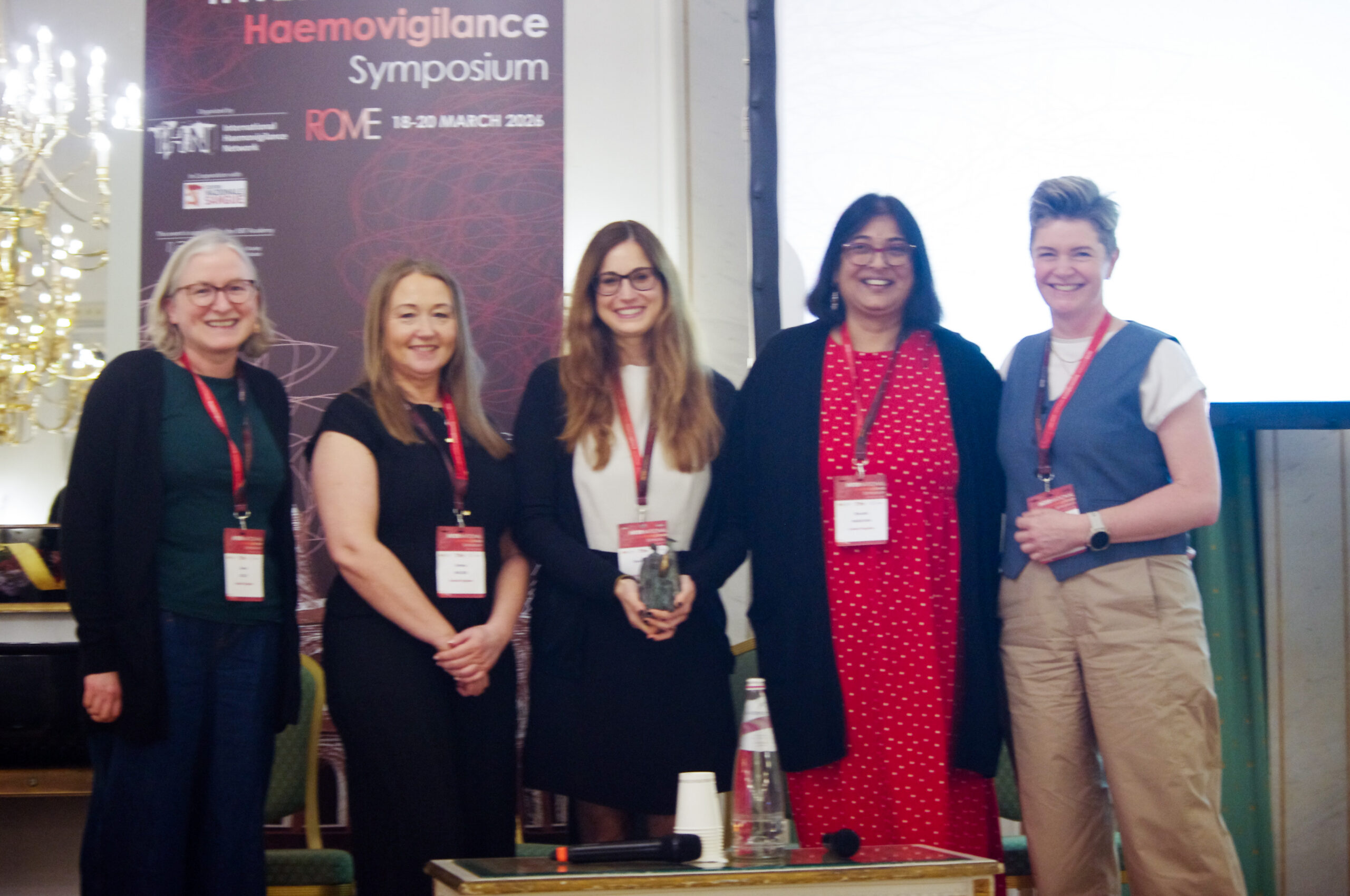
IHN Announces 2026 Award and Medal Recipients
The International Haemovigilance Network (IHN) is delighted to announce the recipients of its 2026 honours, recognising outstanding contributions to haemovigilance, patient safety, and transfusion medicine worldwide.
IHN Award (Individual): Barbee Whitaker
The IHN Award (Individual) is proudly presented to Barbee Whitaker in recognition of her exceptional leadership and global impact on haemovigilance and patient safety.
Barbee has played a pivotal role in advancing haemovigilance systems in the United States, including the development of the CDC National Healthcare Safety Network (NHSN) Hemovigilance Module and the AABB Donor Hemovigilance Program. Her work has strengthened both recipient and donor safety and established foundational infrastructure that continues to shape national practice. She has advanced the use of large-scale data and innovative technologies to improve adverse event detection and surveillance. Her leadership in major national studies, including ADVANCE and TTIMS, has contributed to significant policy developments and strengthened the scientific basis for donor eligibility and transfusion safety.
Within IHN, Barbee has made outstanding contributions as Chair of the IHN Seminar Committee, leading the delivery of international symposia and guiding the organisation through the challenges of the COVID-19 pandemic with the successful transition to virtual programming.
Barbee is widely respected for her inclusive leadership, clarity of vision, and commitment to mentorship. Her contributions have had a lasting global impact on haemovigilance systems and patient safety.
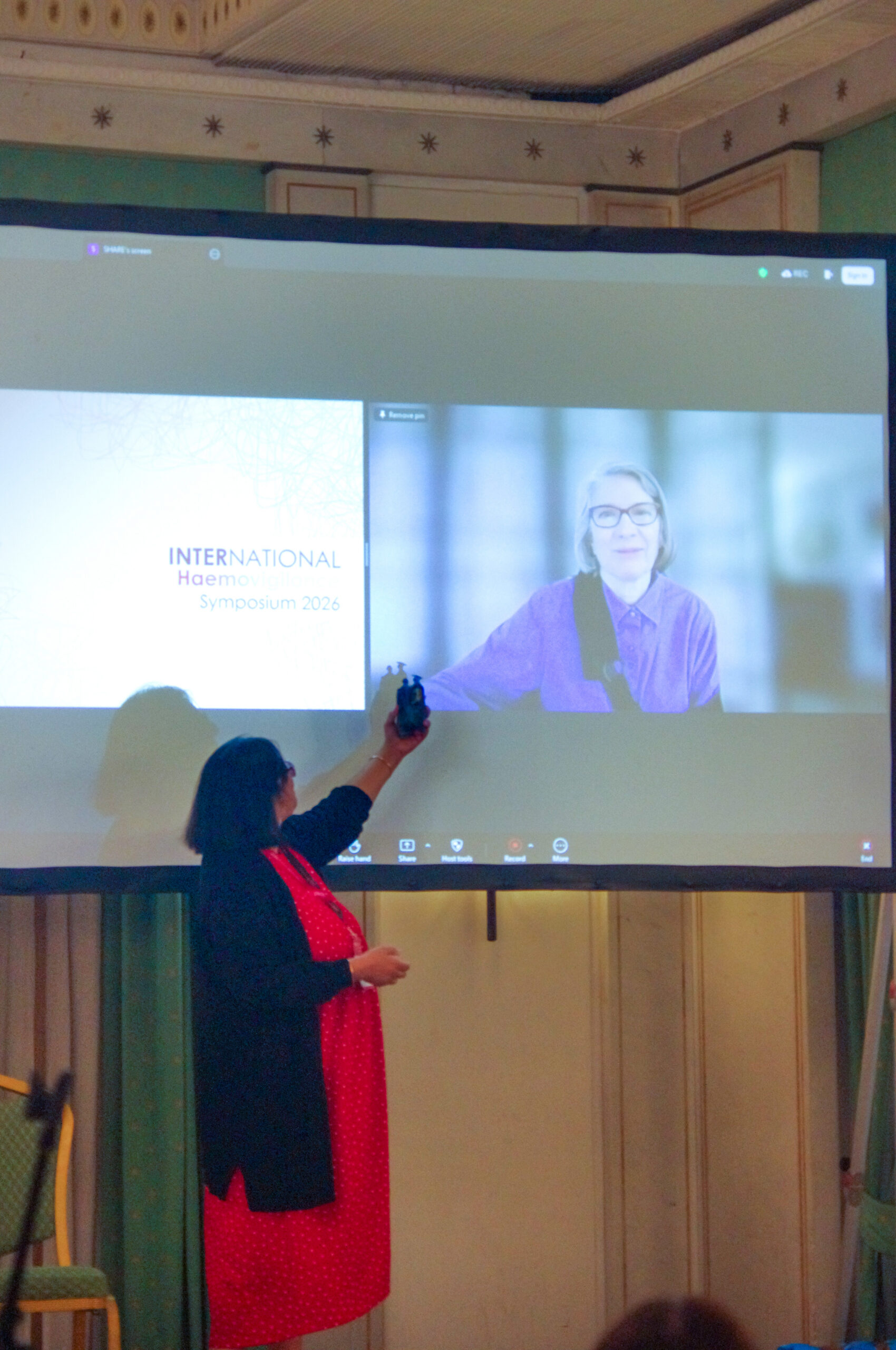
IHN Medal: Øystein Flesland
The IHN Medal is awarded to Øystein Flesland in recognition of his lifelong dedication to haemovigilance and his profound contributions at both national and international levels.
Øystein was the founder of the Norwegian haemovigilance system (TROLL), establishing a robust, professionally led framework that has served as a model for surveillance and safety. Over nearly two decades of leadership, he played a central role in embedding haemovigilance into national health systems and regulatory frameworks.
Internationally, Øystein has contributed extensively to the development of haemovigilance practice through his work with the EDQM Blood Guides, the International Society of Blood Transfusion (ISBT), and European vigilance initiatives. He has also served as the IHN Official Contact Person for Norway and as an active member of the IHN Board.
A prolific contributor to the scientific community, Øystein has authored more than 60 peer-reviewed publications, with work spanning donor safety, plasma therapies, and haemovigilance systems. Known for his expertise, collaborative spirit, and generosity in sharing knowledge, Øystein continues to inspire colleagues worldwide even beyond his formal retirement.
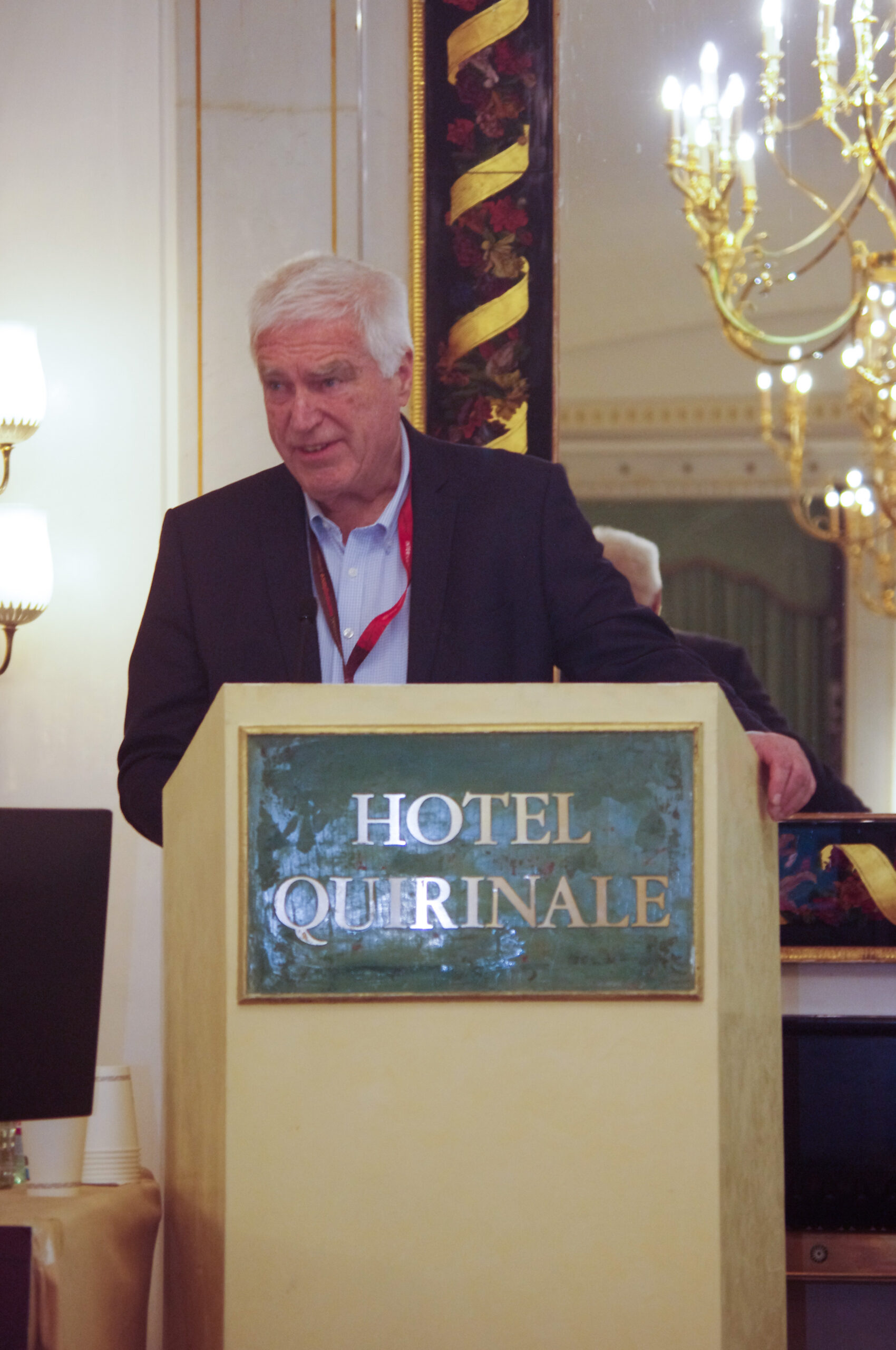
IHN Award (Team): SHOT (Serious Hazards of Transfusion)
The International Haemovigilance Network (IHN) is delighted to present the IHN Award (Team Category) to SHOT (Serious Hazards of Transfusion), United Kingdom, in recognition of its outstanding and sustained contribution to haemovigilance and transfusion safety over the past three decades.
Established in 1996, SHOT is one of the world’s pioneering national haemovigilance systems. Over 30 years, it has set international standards for the systematic reporting, analysis, and learning from transfusion-related incidents, significantly improving patient safety in the UK and influencing best practice globally.
Through its comprehensive annual reporting and evidence-based recommendations, SHOT has driven meaningful improvements across clinical and laboratory transfusion practice. The introduction of the SHOT Transfusion Safety Standards in 2025 represents a major milestone, further strengthening the reliability, effectiveness, and safety of transfusion care.
SHOT has also demonstrated exceptional leadership in education, developing a wide range of accessible learning resources—including e-learning, webinars, podcasts, and case-based tools—many co-produced with patients and healthcare professionals. Its strong commitment to patient partnership is exemplified by initiatives such as the My Transfusion app, providing clear, evidence-based information to patients and supporting informed decision-making.
Innovation has been a hallmark of SHOT’s work, including the integration of human factors and ergonomics principles into haemovigilance practice, contributing to safer system design and reduced error. Its impact in this area has been nationally recognised with patient safety awards and professional honours.
The programme’s scope has continued to expand, notably with the integration of donor vigilance in 2015, ensuring a true vein-to-vein approach to safety. SHOT has also played a key role in supporting national audit, guideline development, laboratory safety initiatives, and transfusion IT safety, as well as contributing valuable data to major clinical research studies.
Widely respected for its openness, collaboration, and commitment to continuous improvement, SHOT has been a vital resource not only within the UK but also for emerging haemovigilance systems around the world.
As SHOT marks its 30th anniversary in 2026, this award recognises a remarkable legacy of leadership, innovation, and impact on transfusion safety.
IHN warmly congratulates the SHOT team on this well‑deserved recognition.